
REVIEW · LEEWARD MANGROVE CLEAR KAYAK TOURS
Mangrove Cay and Iguana Island Tours
Iguanas meet you on a beach. This 3-hour Turks and Caicos outing pairs Iguana Island at Little Water Cay (rock iguanas, white sand, boardwalk time) with a mangrove-and-cay water session for sharks, turtles, conch, stingrays, and great bird spotting. I especially love how the scenery shifts fast, from turquoise channel calm to reptile-and-salt-air beach time, plus the chance to spot wildlife up close in a small group. The one drawback to plan around is the tour is weather dependent and you’ll want moderate physical comfort for time on the water.
The price is $150 per person with pickup offered, and it runs with a maximum of 15 travelers. You’ll use a mobile ticket, and the pacing feels built for seeing a lot without making the day into an all-day slog. It’s a smart choice if you want nature that feels hands-on, not distant behind glass.
In This Review
- Key things to know before you go
- Little Water Cay and Iguana Island: where the beach feels ancient
- Mangrove Cay and Turks and Caicos: sharks, conch, and upside-down surprises
- Paddling style: towed, then paddled, guided spotting
- Iguanas, turtles, sharks, conch: what to photograph and how
- Guide names, vibe check, and how to get the most out of the water
- Price and value: what $150 buys in Turks and Caicos
- Weather and timing: the day depends on the sea
- What to bring for comfort on Iguana Island and Mangrove Cay
- Should you book this Mangrove Cay and Iguana Island tour?
- FAQ
- Where is the Mangrove Cay and Iguana Island tour located?
- How long does the tour take?
- Is pickup provided?
- Do I need a printed ticket?
- What do you do on Little Water Cay (Iguana Island)?
- What wildlife might you see on Mangrove Cay?
- What fitness level is required?
- How large is the group?
- Is the tour refundable if I cancel, and what if it is canceled for weather?
Key things to know before you go
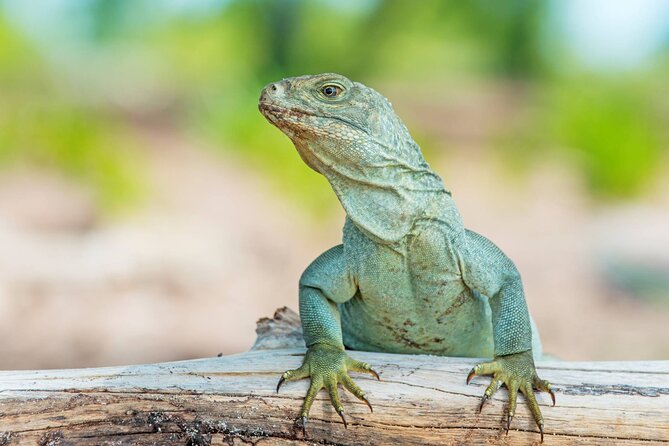
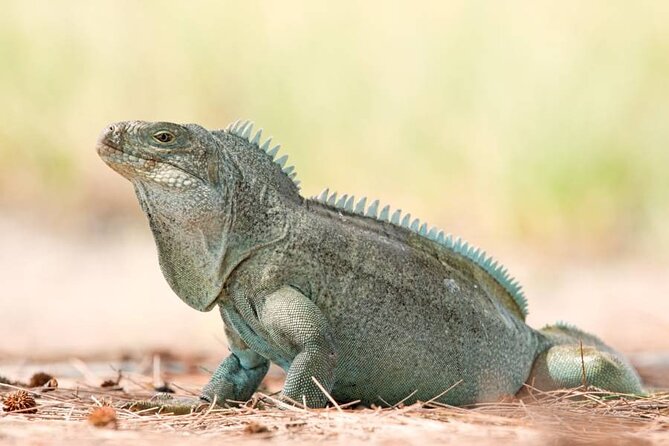
- Rock iguanas at Little Water Cay: Photograph harmless rock iguanas in their natural setting from designated walkways.
- Mangrove channels with real ocean life: You have a strong shot at juvenile sharks, turtles, stingrays, conch, and starfish.
- Birdwatching right from the water: Brown pelicans, green herons, tricolored herons, reddish egrets, and American oystercatchers may appear.
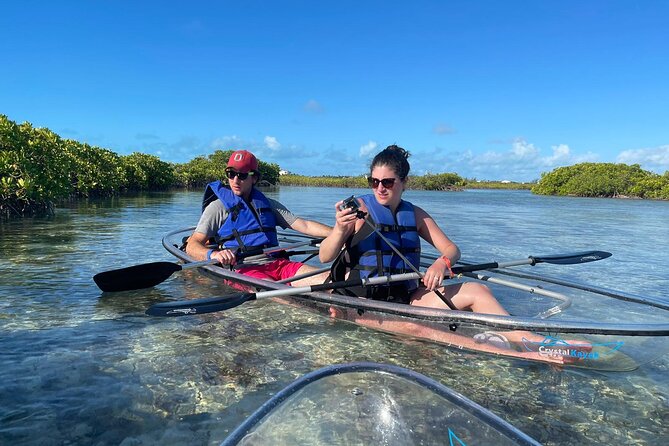
- Clear kayak time and guided spotting: The water setup helps you see what’s underneath while a guide helps you find the animals.
- Small group, smoother water flow: Max 15 travelers means less chaos than big-multitour schedules.
- Weather controls everything: Good weather is required, so check expectations for wind and sea conditions.
Little Water Cay and Iguana Island: where the beach feels ancient
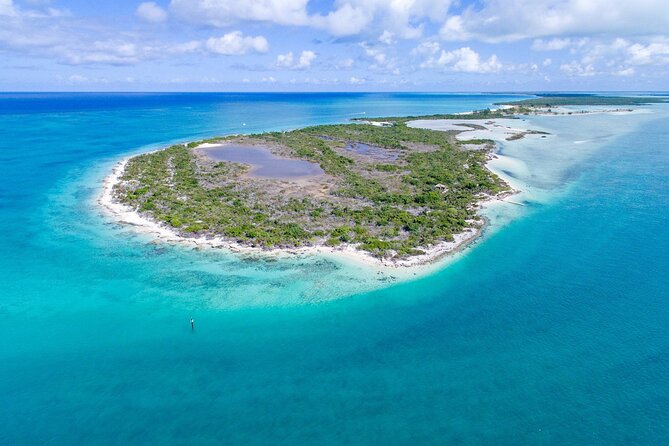
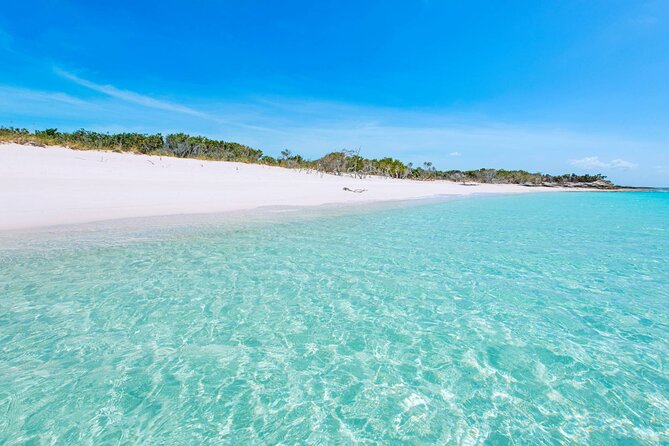
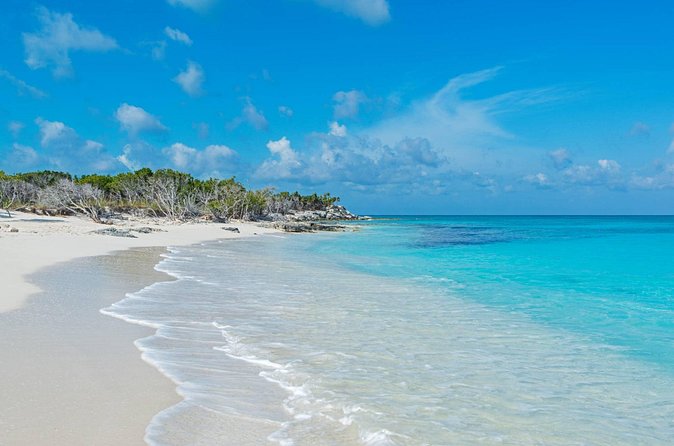
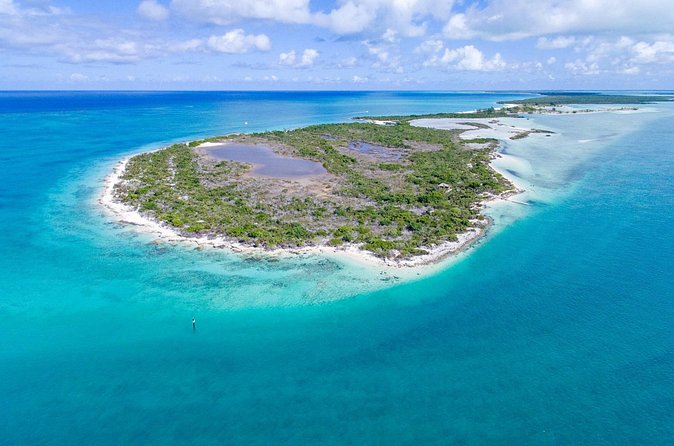
Little Water Cay, also called Iguana Island, is the kind of place that makes you stop rushing. You start by moving across a bright turquoise channel, then you step onto sand that feels like it’s been waiting forever, with wave-worn coral edges and palms swaying in the wind.
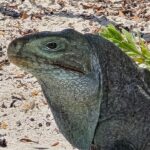
The main reason to come is the rock iguanas. You’re not looking at them from a faraway viewpoint. On Iguana Island, the setting is managed with boardwalks and visitor access that keeps people moving through the habitat without bulldozing it. That’s why so many people love the photo ops. You can often watch them right while you’re on the beach, and that changes the whole vibe from sightseeing to actually sharing space with wildlife.
You’ll also get real “vacation” time mixed in. Expect white sand, salt air, and a shoreline that’s scenic even when you’re not looking for animals. And yes, there’s a side of nature here that includes mosquitoes in the mangrove parts, so plan for bug spray and breathable clothes.
One more practical thing: the time on Iguana Island is long enough to slow down. Plan for about two hours here, so you can settle in, take photos, and not feel like you’re sprinting for the next thing.
More clear kayak paddles through the Leeward mangroves
Mangrove Cay and Turks and Caicos: sharks, conch, and upside-down surprises
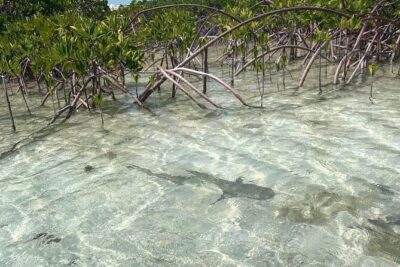
After Iguana Island, the tour shifts into mangroves and a cay system in the Turks and Caicos. Mangrove Cay is a haven because it’s sheltered. That shelter means life gathers: in the channels and shallows you can spot marine and bird wildlife, and the root systems create hiding places for small fish schools.
Here’s the wildlife list that matters most for your expectations: juvenile lemon sharks and nurse sharks, small turtles, conch, southern brown stingrays, starfish, and lots of juvenile fish. Even if you don’t see every item, the odds are good that you’ll catch multiple types of animals once you’re out in the right areas.
You’ll also want to keep your eyes up. Birdwatching is part of the experience, with chances for brown pelicans, green herons, tricolored herons, reddish egrets, and American oystercatchers. This matters because it gives you something to focus on even when the water is calm and the animals are taking their time.
The guide part is what turns a “nice paddle” into an animal hunt. In several accounts, guides helped people find what to look for and where to look, not just point at the horizon. If you want the best chance at sharks and stingrays, you’ll follow the guide’s pacing and stopping points instead of treating it like a solo kayak cruise.
Also, don’t forget the small weird nature details. The environment includes mangrove swamps, and the area is described with floating upside-down jellyfish. It’s not the kind of detail you forget once you see it.
This portion runs about one hour, so it’s short. That’s a plus if you don’t want an all-morning workout, and it’s enough time to rack up sightings if conditions cooperate.
Paddling style: towed, then paddled, guided spotting
Not every second on the water is equal. Some of the setup focuses on helping you get to the island experience without making you paddle the entire distance under full sun.
In the feedback you’ve been given, people describe a format where they are often towed to reach the island areas, then do more active paddling among the mangroves. That pacing helps keep the trip fun for a wider range of fitness levels, especially if you’re willing to do a moderate amount of water time.
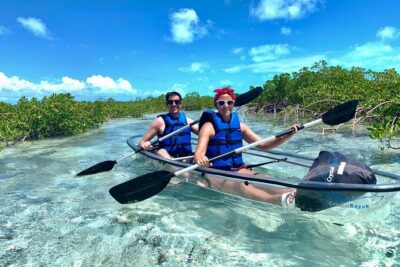
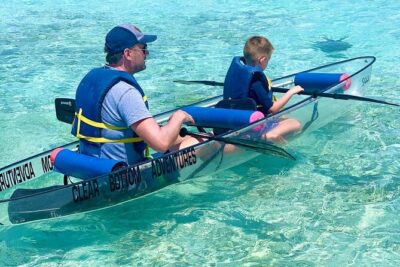
You may also paddle in clear kayaks. That detail matters more than it sounds. When the kayak is clear, you can notice movement and shapes under the surface sooner, and it helps you connect the guide’s directions to what you’re actually seeing.
One note on navigation: when lots of kayak tours share the same water space, it can get busy. If you’re sensitive to crowding or prefer lots of open space, arrive mentally ready for some gentle traffic management, and keep your attention on the guide.
Iguanas, turtles, sharks, conch: what to photograph and how
If you’re bringing a camera, I’d plan your attention in two lanes: above water for iguanas and birds, under water for turtles, sharks, stingrays, and conch. Rock iguanas tend to be easiest when you slow down. Move carefully. Let the animal settle into your frame.
For marine life, timing and angles matter. When you spot something interesting, give it a few seconds. Juvenile sharks and stingrays can shift quickly, and hurried pointing often means you miss the moment they hover into view.
Conch is another highlight you can look for while you’re in the right shallows. It may take some patience. Guides typically do more than “watch and wait.” They help you find the spots where animals feed or rest, including areas where small fish schools hide among mangrove roots.
Also, bring patience for the “not just one animal” effect. The best moments tend to stack. You’re not hunting one species at a time. You’re scanning for multiple signs of life, and the mangrove ecosystem supports that.
On the bird side, I’d treat herons and egrets like a patience game too. They might be still for long stretches, then suddenly relocate. Brown pelicans can also appear fast, especially when the group is already moving slowly through a channel.
Guide names, vibe check, and how to get the most out of the water
The single best predictor of an enjoyable animal tour is often the guide’s energy and their ability to translate the environment into something you can actually spot. In the experience you provided, several guides are praised for being friendly, interactive, and good at answering questions.
If your guide is someone like Mikey, he’s noted for keeping kids excited while explaining wildlife in a way that makes it click. Guides such as Yves, Manuel, Marcus, Miracle, Innocent, Alvin, and Money are also singled out for guiding people to sightings and keeping the mood light and focused. That “fun plus facts” combo is what helps you stop thinking of it as just an outing and start thinking of it as a lesson you enjoy.
Your role is simple: ask questions when you want them, but also give the guide room to lead the group. A guide’s best “find” usually comes right when the group is positioned properly and moving at the right time.
And one more small tip from real-world experience: if you get towed part of the way, don’t assume you’ll be soaked the whole time, but do plan for water splashes and sea spray. A dry bag helps, especially for phones and anything you can’t replace.
More Little Water Cay iguana runs we have stepped ashore on
- Mangrove & Iguana Clear Kayak Tour
★ 5.0 · 507 reviews - 3HR Emerald reef snorkeling, iguana island and shipwreck tour
★ 5.0 · 247 reviews - Turtle Eco Tour on Stand-Up Paddleboards or Kayaks into the National Marine Park
★ 5.0 · 130 reviews - 3HR Clear Kayak Mangrove and iguana island Tour in Leeward
★ 4.5 · 110 reviews - 3HR Snuba, shipwreck and Iguana island tour
★ 5.0 · 93 reviews
Price and value: what $150 buys in Turks and Caicos
At $150 per person, this isn’t a budget activity, but it also isn’t a full-day “everything included resort” situation. Here’s why it can still feel like good value.
First, you get a double-nature experience in about 3 hours. Iguana Island gives you the rock iguana beach time. Mangrove Cay gives you the underwater and bird-life side, including sharks, turtles, stingrays, and conch. If you tried to arrange these elements on your own, you’d likely spend extra time coordinating boat access and wildlife viewing locations.
Second, pickup is offered. In places like Providenciales, that can be the difference between a smooth start and a stressful scramble.
Third, the activity limits groups to a maximum of 15 travelers. Smaller groups make it easier to hear the guide, keep your bearings, and move without turning the kayak route into a traffic jam.
Finally, admission is described as ticket free for the main stops. That can reduce the “surprise add-ons” feeling and keep the overall price easier to understand.
Weather and timing: the day depends on the sea
This tour requires good weather. That’s not a minor detail, it’s the backbone of whether the day works or not. If the wind and sea state aren’t suitable, the operator may cancel and then offer a different date or a full refund.
So when you’re planning your Turks and Caicos days, pick a time window that gives you flexibility. If you try to lock the trip into a single fixed morning and everything goes wrong, you lose your best chance.
As for time of day, you’re looking at about two hours at Little Water Cay and about one hour on the Mangrove Cay portion. That schedule tends to keep you out of the water long enough to see plenty without committing to an exhausting stretch.
What to bring for comfort on Iguana Island and Mangrove Cay
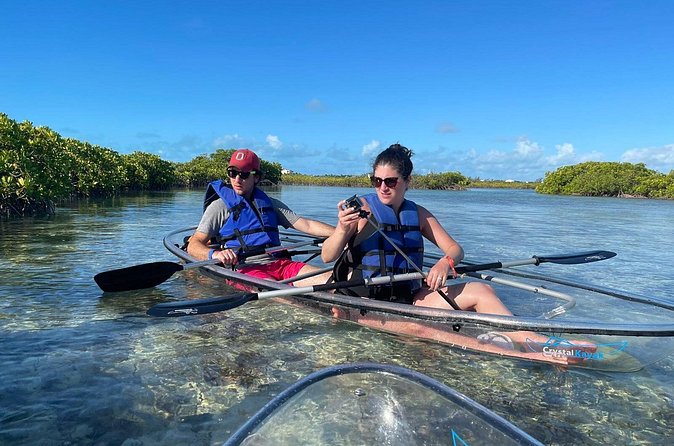
You’re on a beach and then on the water, so pack for sun, salt, and splash. A simple list will save you from an annoying day.
- Sunscreen: Bring it. People call this out directly.
- Bug protection: Mosquitoes show up in the mangrove swamp environment.
- Water protection for your phone: Some people wished they’d had a dry bag, so use one if you own it.
- Moderate physical comfort: This tour is listed for moderate fitness, which usually means you can handle being on and around the water without getting wiped out.
- Swimwear and a plan for wet gear: Even if you’re not paddling the whole time, you’ll get salt air and sea spray.
If you’re sensitive to sun, use a hat and sunglasses. The Caribbean light is bright, and time on white sand makes glare worse.
Should you book this Mangrove Cay and Iguana Island tour?
Book it if you want a wildlife-focused half-day that combines rock iguanas on Iguana Island with mangrove and cay viewing for sharks, turtles, stingrays, conch, and birds. It’s especially appealing if you like guided help, because the guide role directly affects your chances of spotting animals rather than just drifting around.
Skip it or think hard first if you dislike weather-dependent plans. You’re also asking for a moderate fitness level, so if you know you struggle with being on the water even for a short stretch, this might not feel comfortable.
If you’re traveling with kids, the praised guide style in your information suggests this can work well, since guides are described as fun and engaged.
If you can be flexible with timing and you want authentic animal encounters in Turks and Caicos, this is a strong match.
FAQ
Where is the Mangrove Cay and Iguana Island tour located?
It takes place in Providenciales, Turks and Caicos.
How long does the tour take?
The duration is about 3 hours.
Is pickup provided?
Yes, pickup is offered.
Do I need a printed ticket?
No, the tour uses a mobile ticket. You also receive confirmation at the time of booking.
What do you do on Little Water Cay (Iguana Island)?
You spend time relaxing on the crystal beach and watching rock iguanas while you can take photos. This stop is about 2 hours.
What wildlife might you see on Mangrove Cay?
In the channels and shallows around the cay, you might see juvenile lemon sharks and nurse sharks, small turtles, conch, southern brown stingrays, starfish, and many juvenile fish. Birdwatching may include brown pelicans, green herons, tricolored herons, reddish egrets, and American oystercatchers.
What fitness level is required?
A moderate physical fitness level is recommended.
How large is the group?
The maximum group size is 15 travelers.
Is the tour refundable if I cancel, and what if it is canceled for weather?
This experience is non-refundable and cannot be changed for any reason. If it is canceled due to poor weather, you’ll be offered a different date or a full refund.
More Loops around the Provo Highlights
- Love Buggy Island Tour with Lunch★ 5.0 · 1,242 reviews
- 3hr Seaside Scavenger hunt★ 5.0 · 250 reviews
- Jet Ski Shipwreck and Private Island Excursion★ 5.0 · 150 reviews
- Providenciales Unmissable Sightseeing Tour★ 4.5 · 140 reviews
More Trips Ashore at Little Water Cay
- Morning Half Day Cruise from Providenciales with Snorkeling and Iguana Island★ 4.5 · 1,222 reviews
- Mangrove & Iguana Clear Kayak Tour★ 5.0 · 507 reviews
- Afternoon Half Day Cruise from Providenciales with Snorkeling and Iguana Island★ 4.5 · 431 reviews
- 3HR Emerald reef snorkeling, iguana island and shipwreck tour★ 5.0 · 247 reviews
More Clear Kayaking in the Leeward Mangroves
- Mangrove Clear Kayak Tour★ 5.0 · 794 reviews
- Mangrove & Iguana Clear Kayak Tour★ 5.0 · 507 reviews
- Kayak Eco Tour★ 5.0 · 245 reviews
- Clear Kayak Photoshoot in Turks and Caicos Islands Providenciales★ 4.5 · 221 reviews
Not quite it? More of the islands we have written up


Leeward Mangrove Clear Kayak Tours, compared.
 ★ 5.0Mangrove Clear Kayak TourFrom $125794 reviews
 ★ 5.0Mangrove & Iguana Clear Kayak TourFrom $155507 reviews
 ★ 5.0Kayak Eco TourFrom $296245 reviews
 ★ 4.5Clear Kayak Photoshoot in Turks and Caicos Islands ProvidencialesFrom $139221 reviews
 ★ 4.5Clear Bottom Kayaks Mangrove TourFrom $125217 reviews
★ 4.5Clear Kayak Photoshoot in Turks and Caicos Islands ProvidencialesFrom $139164 reviews
★ 4.5Clear Bottom Kayaks Mangrove TourFrom $125217 reviews
★ 4.5Clear Kayak Photoshoot in Turks and Caicos Islands ProvidencialesFrom $139164 reviews
 ★ 5.0Turtle Eco Tour on Stand-Up Paddleboards or Kayaks into the National Marine ParkFrom $156130 reviews
 ★ 4.5Clear kayak Drone photoshootFrom $155119 reviews
Browse the lists this tour appears in